

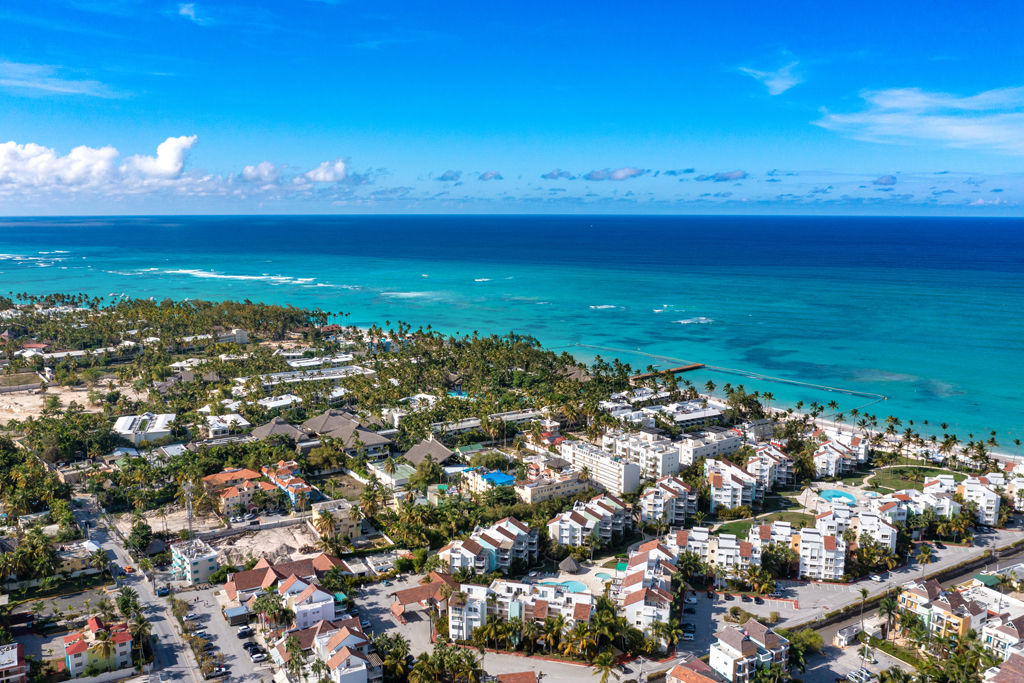
Beachfront communities in Punta Cana offer modern homes, stable value, and easy access to the Caribbean lifestyle.
Buying real estate in Punta Cana, Dominican Republic looks effortless − and in many ways, it is. Foreign ownership is straightforward, property taxes are low, and the idea of living by the Caribbean feels within reach. But behind the perfect beaches and glossy brochures, there’s more to the process than most realize. Before diving into the details, it’s worth understanding what makes Punta Cana such an appealing place to buy property.
Table of Contents
THE FINE PRINT BROCHURES SKIP
Buying a house in Punta Cana is easy to start, but slower to finish. Closings often take longer than buyers expect, not because the process is complicated, but because every detail has to check out before the sale is officially recorded. Here’s what usually shapes the timeline:
- Every title starts with a deslinde. This is the officially approved land survey that confirms a property’s exact boundaries. In the Dominican Republic, the Title Registry will not issue a new ownership certificate without it, which is why missing or outdated surveys are a common cause of closing delays.
- Registry reviews take time. Once the survey is approved, the registry verifies ownership records and confirms there are no liens or disputes before releasing the new title. Depending on the workload at the Punta Cana office, this step may take anywhere from a few days to several weeks.
- New developments follow a slower pace. In condos and resort projects, individual titles are released only after the developer’s master title is complete. It’s a normal step in the process, but it may stretch closing timelines.
- Language tends to slow communication. While most professionals in Punta Cana speak English, all official documents are processed in Spanish. Having a local attorney who’s fluent in both languages keeps correspondence clear and prevents small misunderstandings that may delay approvals.
- Agent standards differ. The Dominican Republic doesn’t have a national licensing board for real estate agents, so experience, client references, and local reputation matter more than formal credentials.
Buyers typically rely on their attorney to track progress directly through the Title Registry’s Puna Cana service office, where most local filings are processed. On average, transactions close within 60 to 90 days, though new builds may take longer as surveys and titles are finalized.
THE TRAPS FIRST-TIME BUYERS FALL INTO

Clear contracts and local legal guidance are key to a smooth buying experience in Punta Cana.
Even in a market as open as Punta Cana, first-time buyers tend to make the same mistakes. Most are small oversights that add up, but they’re easy to avoid once you know where buyers usually slip. Here are the ones to watch for:
- Relying on the developer’s lawyer. Many buyers assume the agent or developer’s attorney represents everyone involved, but their duty is to the seller. Hiring your own bilingual real estate attorney keeps the process balanced and protects your interests from the start. They’ll handle the title check, draft the Promise of Sale, and manage the registration. Legal fees usually range from 1% to 1.5% of the purchase price, depending on the transaction’s complexity and the services included.
- Assuming furniture is included. In the Dominican Republic, homes don’t automatically come furnished. Unless it’s clearly itemized in the contract, expect the property to be sold empty.
- Underbudgeting closing costs. Once the paperwork begins, many first-time buyers forget about extra fees. In addition to the sale price, budget for a 3% transfer tax plus notary, registration, and legal costs (a total of roughly 3% to 5% of the purchase price). If the property qualifies under the CONFOTUR law, you could save significantly, as those taxes may be waived for up to 15 years.
- Overlooking ongoing costs. Monthly dues vary widely by community and property size. Condo fees typically range from about US$200 to US$1,000 per month, depending on the building, amenities, and unit size. For single-family homes, dues generally fall between US$200 and $600 per month, again driven mainly by the community and size of the property. You should confirm current dues early in the process, ideally before signing a contract.
- Expecting foreign-style financing. Financing for non-residents varies by property type. Resale purchases usually require 40-50% down, with loan-to-value ratios capped at around 50-60%. Lower down payments, sometimes as low as 20%, are generally limited to new construction through developer financing during the build phase. As a result, many foreign buyers pay in cash or finance through their home country, often using a HELOC (a home equity line of credit secured against an existing property).
Most buyers are required to put down 20-30% when signing the Promise of Sale. This deposit is mandatory, so it’s important to have your attorney review the terms before transferring any funds.
WHAT IT REALLY MEANS TO OWN PROPERTY HERE

What began as a resort destination has grown into one of the Caribbean’s most desirable places to own property.
With proper guidance, buying property in Punta Cana is surprisingly straightforward for foreigners. Non-residents have the same ownership rights as Dominican citizens, and the process of holding title is well-defined and secure. You don’t need residency or special permits to buy, which makes the market open and accessible to anyone ready to invest.
What sets Punta Cana apart is how seamlessly it blends comfort, convenience, and resort living. Communities like Punta Cana Village sit just minutes from the international airport, making travel effortless for both full-time residents and seasonal homeowners. Families have access to the Puntacana International School, known for its bilingual curriculum and international accreditation, while healthcare is readily available at IMG Hospital and Hospiten Bávaro. Everyday needs are easily met at Blue Mall Puntacana, a modern shopping and dining hub that serves as the area’s social center.
Even with this level of convenience, Punta Cana never loses its coastal character. Residents spend weekends exploring the Ojos Indígenas Ecological Reserve, relaxing on quiet beaches, or golfing at Corales and Punta Espada, two of the Caribbean’s most scenic courses.
FAQs
Can foreigners buy beachfront property in Punta Cana?
Yes. The Dominican Republic allows full foreign ownership, including beachfront and ocean-view properties. There’s no residency requirement or restriction on buying along the coast, though projects near protected areas may need additional environmental approval.
How long does it take to complete a purchase?
Most transactions close within 30 to 60 days, depending on how quickly documents and titles are cleared. In new construction, a purchase is considered closed once the Promise of Sale is signed. The property is then built, and the title transfer takes place upon completion. Throughout the process, your attorney — working alongside your agent — handles all follow-ups, reviews every document, and guides you through each step so nothing’s left unchecked.
What property management options are available for absentee owners?
Many resort and gated communities in Punta Cana offer on-site management that handles maintenance, bill payments, and short-term rentals. Independent property managers are also common, typically charging 20-30% of rental income for full-service management, which often includes listing setup, guest check-ins, and basic upkeep.
Do homeowners pay annual property taxes?
Yes, but they’re quite reasonable. In the Dominican Republic, the annual property tax (called the IPI) is just 1% of a home’s appraised value above roughly US$180,000. Properties valued under that amount don’t pay any tax at all. Plus, if your property qualifies under the CONFOTUR law, you could enjoy a full exemption for up to 15 years − a major perk for investors and vacation homeowners alike.
Is buying property in Punta Cana a safe investment?
Yes. The real estate market in Punta Cana, Dominican Republic is built on solid legal ground, thanks to Law 108-05, which gives foreign buyers the same property rights as locals and ensures secure ownership through the national Title Registry. Add to that a strong tourism-driven economy and steady international demand, and it’s easy to see why Punta Cana remains one of the Caribbean’s most active and reliable property markets.
TURN YOUR VISION OF ISLAND LIVING INTO REALITY
Buying real estate in Punta Cana, Dominican Republic is a major step, and it deserves clear guidance from someone who knows the market inside and out.
Leading local Realtor Jelena Golubovic brings years of experience and a multilingual approach to Caribbean real estate. Fluent in English, Spanish, Serbian, Italian, and German, she bridges the gap between local insight and international expectations. Her clients value her for her transparency, market knowledge, and ability to turn complex transactions into smooth, rewarding experiences. Whether you’re looking for a beachfront villa, a long-term investment, or a quiet home near the coast, Jelena’s expertise makes every step of the process clear and personal.
To start your search or discuss your goals directly, contact Jelena at 809.351.5863 or via email. She’ll help you navigate every stage of the process and show you how straightforward owning in Punta Cana will be with the right expert by your side.